

Cart
0
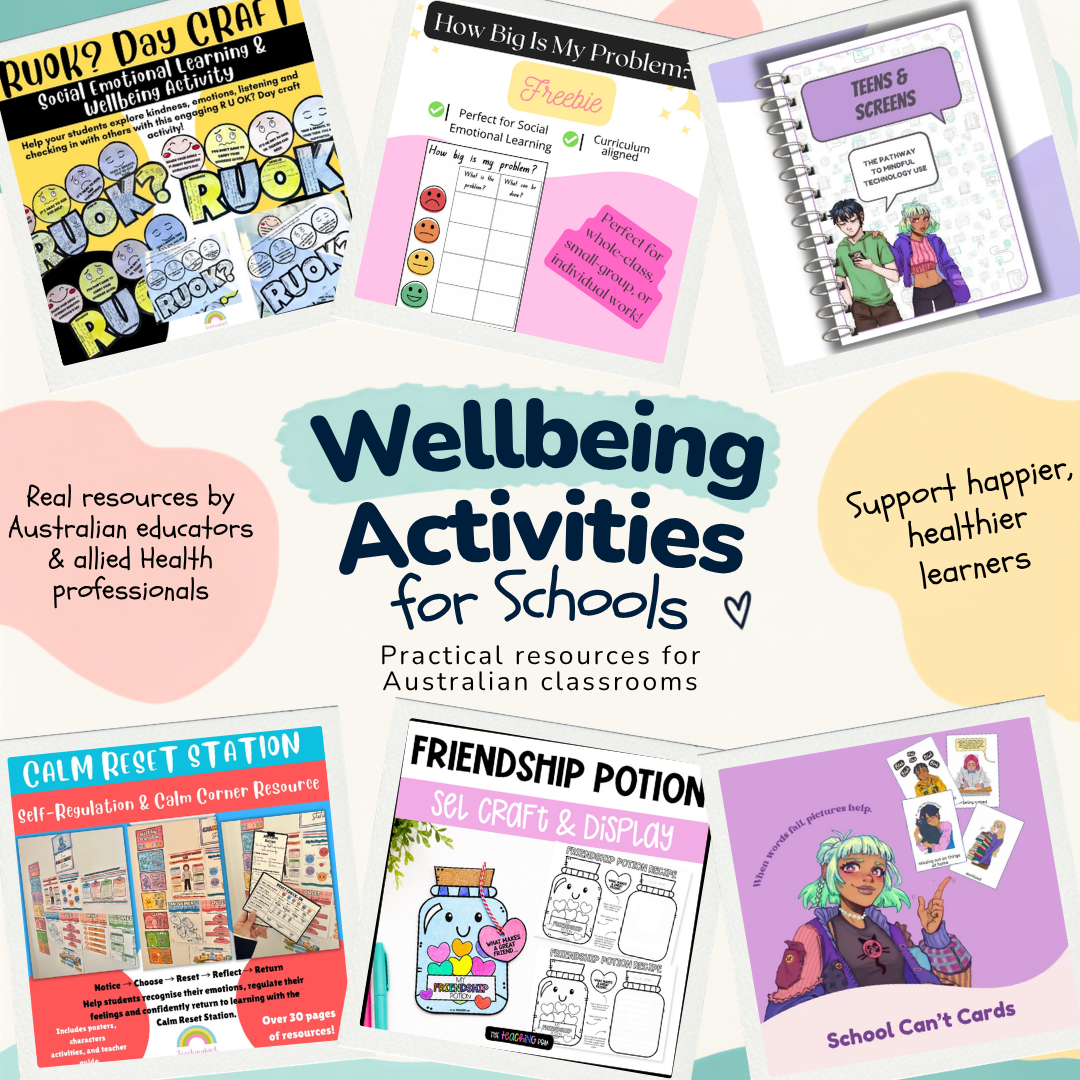
Supporting student wellbeing doesn’t always need to mean adding another big lesson to an already packed week.
Sometimes it’s the small things — a quick emotional check-in, a conversation prompt, a regulation strategy or an activity that gives students a safe way to express what’s going on.
Here are some practical wellbeing ideas and resources that can be used across Australian primary and secondary classrooms.
1. Start with simple emotional check-ins
A quick check-in at the beginning of the day can give students an opportunity to identify how they’re feeling while also giving teachers valuable insight into how students are arriving at school.
This could be as simple as choosing an emotion, rating how they’re feeling or responding to a short prompt.
Try: emotion cards, feelings check-ins, mood scales or daily reflection prompts.
2. Build emotional vocabulary
Being able to recognise and name emotions is an important part of helping children communicate what they’re experiencing.
Activities that explore different emotions, physical signs of feelings and appropriate ways to respond can easily be incorporated into health lessons, morning routines or small-group work.
3. Give students strategies for big feelings
Rather than simply telling students to “calm down”, explicitly teaching a range of strategies gives them something practical to try.
Think breathing exercises, movement breaks, sensory strategies, calm spaces and visual prompts students can refer to when they need them.
4. Make space for conversations about friendship
Friendship issues can take up a lot of classroom time.
Resources around kindness, conflict resolution, boundaries, communication and problem-solving can help turn those everyday friendship dramas into opportunities to explicitly teach social skills.
5. Support students experiencing school-related anxiety
For some students, attending school itself can feel overwhelming.
Visual tools, communication cards and resources that help children communicate what they’re experiencing can be useful alongside the individual support already being provided by families and professionals.
Featured resource: School Can’t Cards
Designed to help students communicate when words feel difficult, these visual cards can support conversations around school anxiety, overwhelm and emotional needs.
6. Use wellbeing days as a conversation starter
Days such as R U OK? Day can provide a natural opportunity to talk about checking in with others, recognising when someone might need support and identifying trusted adults students can speak to.
The most useful activities don't have to be complicated. A thoughtful discussion, reflection activity or classroom display can be enough to start an important conversation.
Ready-to-use wellbeing resources
Sometimes you don't need another idea to plan — you need something that's already made.
Shareify has a growing collection of digital wellbeing resources created by educators and professionals, with resources for emotional regulation, social skills, school anxiety, classroom wellbeing and more.
Explore wellbeing resources on Shareify → Click Here
